
Moka pot coffee powder: what to buy, and how to brew it
Use a medium-fine grind, a little coarser than espresso, with no chicory.
Fill the basket level without pressing it down, and take the pot off the heat as soon as it starts to sputter. South Indian filter powder is the wrong match: it is ground for slow dripping, and its chicory can turn a moka pot brew heavy and bitter.
 By Nirikshith, Founder, Navees Farm & Roastery.
Updated 9 November 2026.
Which coffee should you use?

You like: Rich and balanced, black or with milk
Premium Blend, moka pot grind
Floral notes with a chocolaty, earthy body

You like: Smoother and more aromatic, often black
100% Arabica, moka pot grind
Floral, citrus and nutty
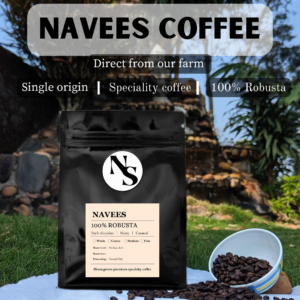
You like: Strong, with plenty of milk
100% Robusta, moka pot grind
Cocoa nibs, molasses and a bold finish
Not sure? Start with the Premium Blend. A moka pot makes a small, strong cup that most people drink with milk. In the blend, the 70% Arabica keeps the aroma and the 30% Robusta adds the body that stands up to milk. If you drink your moka coffee black, the 100% Arabica is gentler. If you want it as strong as possible, choose the Robusta.

Want to try before buying a bigger pack? The 100% Arabica moka pot grind also comes in a 100 g pack for ₹199. All three come in 250 g, 500 g and 1 kg.
Why the grind matters in a moka pot
A moka pot pushes water up through the coffee with steam pressure, in about a minute. Too fine, and the water struggles through and the coffee tastes burnt. Too coarse, and the water rushes through and the coffee tastes thin and sour. That is why it needs its own grind:
| Brew method | Grind | Our guide |
|---|---|---|
| Espresso machine | Fine | |
| Moka pot | Medium-fine | This page |
| South Indian filter | Medium-fine to fine, often with chicory | Filter coffee guide |
| Pour over and AeroPress | Medium | |
| French press | Coarse | French press guide |
| Cold brew | Coarse | Cold brew guide |
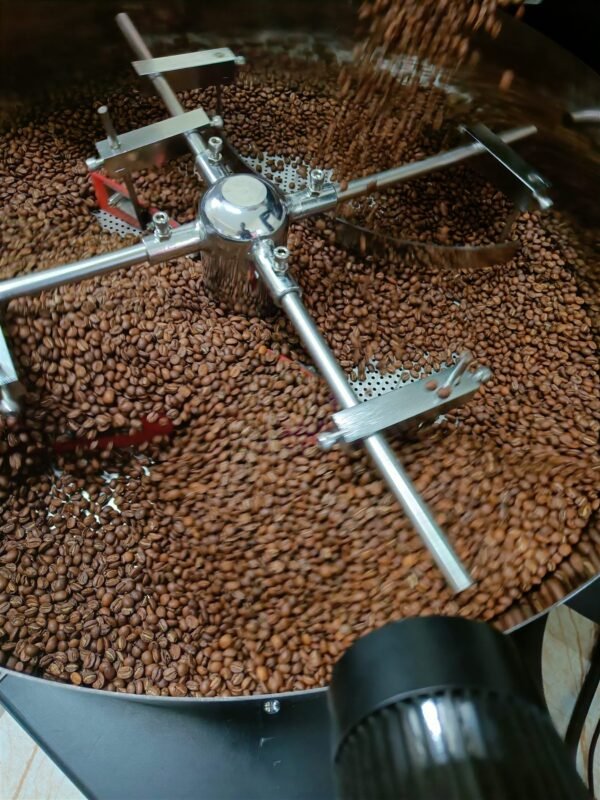
We grind every pack to order for the brew method you choose, from coffee roasted in small batches every two days, so you don’t have to guess.
How to brew it
- Fill the bottom chamber with hot water, up to just below the valve.
- Fill the basket with coffee. Level it with your finger, and do not press it down.
- Screw the pot together, using a cloth, because the base is hot.
- Heat it gently, with the lid open, on a low to medium flame.
- When the coffee starts to sputter, take it off the heat straight away, and run the base under cold water.
- Pour and stir. Add hot water or milk to taste.
How much coffee for a 3-cup or 6-cup pot?
The basket sets the amount: fill it level, and that is your dose.
As a rough guide, a 3-cup pot takes about 15 to 17 g of coffee and makes about 130 ml, and a 6-cup pot takes about 30 g and makes about 250 ml. A moka “cup” is a small espresso-sized cup, not a mug. Don’t half-fill a big pot to make less coffee; use a smaller pot.
If it does not taste right
| It tastes | Try |
|---|---|
| Bitter or burnt | Lower the heat, start with hot water, and stop as soon as it sputters |
| Weak or sour | Fill the basket fully and level, and check you used a moka pot grind |
| No coffee comes up | The grind is too fine, or the coffee is pressed down too hard |
Common questions
Can I use filter coffee powder in a moka pot?
It works, but it is not ideal. Many filter powders contain chicory, which can make a moka pot brew heavy and bitter. A moka pot grind without chicory gives a cleaner cup.
Is moka pot coffee the same as espresso?
No. It is strong and concentrated, but it is brewed at far lower pressure than an espresso machine. It makes a good base for milk coffee.
Which Navees coffee has the most caffeine?
The 100% Robusta. Robusta beans generally hold more caffeine than Arabica; see which coffee has the most caffeine.
By Nirikshith, Founder, Navees Farm & Roastery. Updated 9 November 2026.