
Coffee guide
How coffee is decaffeinated
Decaf starts with green coffee beans. Different processes draw out caffeine before roasting, while aiming to preserve the bean’s flavour and aroma.

Inside a decaf process
Three routes to a decaffeinated bean
Decaffeination happens while the beans are still green. Open a method to see the broad idea behind each route.
01Water process
In the Swiss Water process, hydrated beans release caffeine into a flavour-rich extract. Carbon filters remove the caffeine, and the extract is reused.
02Carbon dioxide
CO₂ under pressure draws caffeine from the beans while aiming to preserve much of their flavour.
03Approved solvents
Some decaffeination methods use approved solvents to remove caffeine. The method used depends on the process.
Two broad approaches
Decaffeination is done before roasting. Processes use water, carbon dioxide or approved solvents to remove caffeine from green beans. The details vary by method and producer.
The Swiss Water Process
In the Swiss Water Process, green beans are hydrated and caffeine moves into a flavour-rich green coffee extract. Carbon filters remove caffeine from that extract, which is reused. It uses water, temperature and time rather than solvent contact with the beans.
Carbon dioxide under pressure
Another approach uses carbon dioxide under pressure to draw out caffeine. Producers control the process to target caffeine while preserving much of the coffee’s flavour compounds.
What “decaf” means
Decaffeinated coffee is not necessarily completely caffeine-free; a small amount can remain. Each method aims to reduce caffeine while keeping the coffee enjoyable. Look for the process details from the roaster if they matter to you.
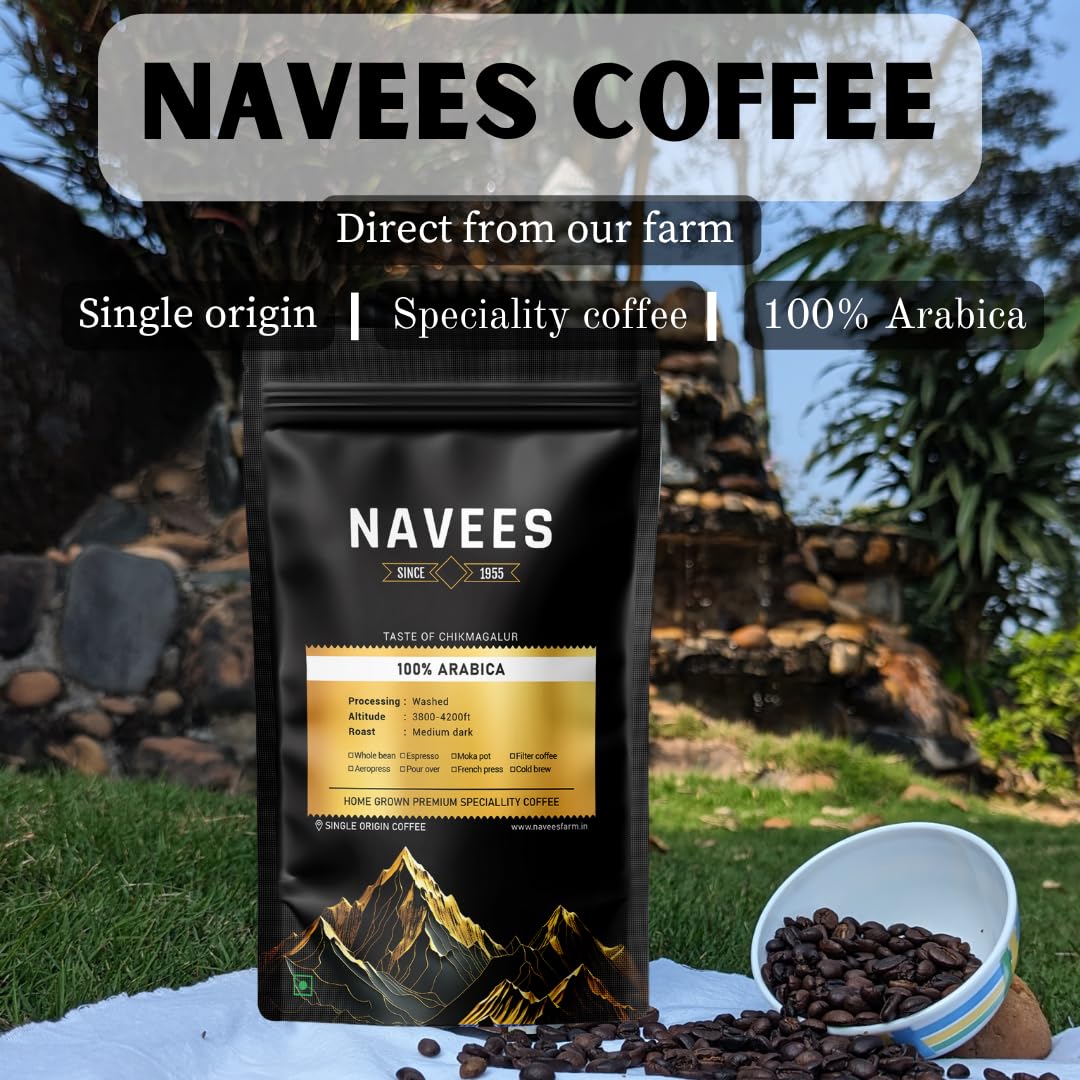
From our farm in Chikmagalur
Navees 100% Arabica Coffee
Our medium-dark roast has floral, citrus and nutty notes. Choose whole beans or the grind that suits your brewer on the product page.
Medium-dark roast · Floral · Citrus · Nutty
Choose your coffee and grind