
Coffee guide · 4 minute read
Coffee grading, made simple
Peaberry, AA and A are useful clues about a lot of coffee. They do not, on their own, tell you exactly how a cup will taste.

Tap a term to explore
Three labels, three different clues
These words do not all describe the same thing. Open a card to see what each one usually tells you, and where the label has its limits.
PeaberryA shape or sorting category
Most cherries develop two seeds. A peaberry forms when one seed develops on its own, so it tends to be rounder. The name describes the bean’s shape; it does not promise a stronger or sweeter cup.
Grade AA term used by some grading systems
In some origins, A refers to a bean size category. The exact meaning depends on the system being used, so it helps to ask which origin or standard the seller means.
Grade AAOften a larger screen size
In many origins, AA describes a larger screen size. Bigger beans are not automatically better tasting, and the term can vary between grading systems.
A simplified shape illustration, not a grading chart. Bean size and grading terms depend on the origin and sorting standard.
What grading looks at
Coffee grading is not one universal scale. Depending on the country and buyer, a lot may be assessed for bean size, defects, moisture, growing region, altitude or cup quality. The label makes more sense when you know which system is being used.
In many origins, “AA” describes a larger screen size. Larger beans are not automatically better tasting, and grading terms can vary from one origin to another.
What “Peaberry” means
Most coffee cherries develop two seeds. A peaberry forms when one seed develops on its own, giving it a rounder shape. It is a bean shape or sorting category; it is not a promise of a stronger or sweeter cup.
Grade A and Grade AA
In some grading systems, A and AA distinguish bean sizes. They are practical sorting terms, not a complete quality score. Processing, freshness, roast and brewing all influence what you taste in the cup.
So if you see AA on a bag, treat it as one detail to ask about. The origin, variety and tasting notes will help you understand the coffee better.
A simple rule: use the grade to understand how beans were sorted, then choose by the flavour and brew style you enjoy.
For a broader overview, see the International Coffee Organization’s explanation of coffee grading.
Quick check · 1 question
What does “AA” often describe?
Choose an answer to see how well the label tells you what is in the cup.
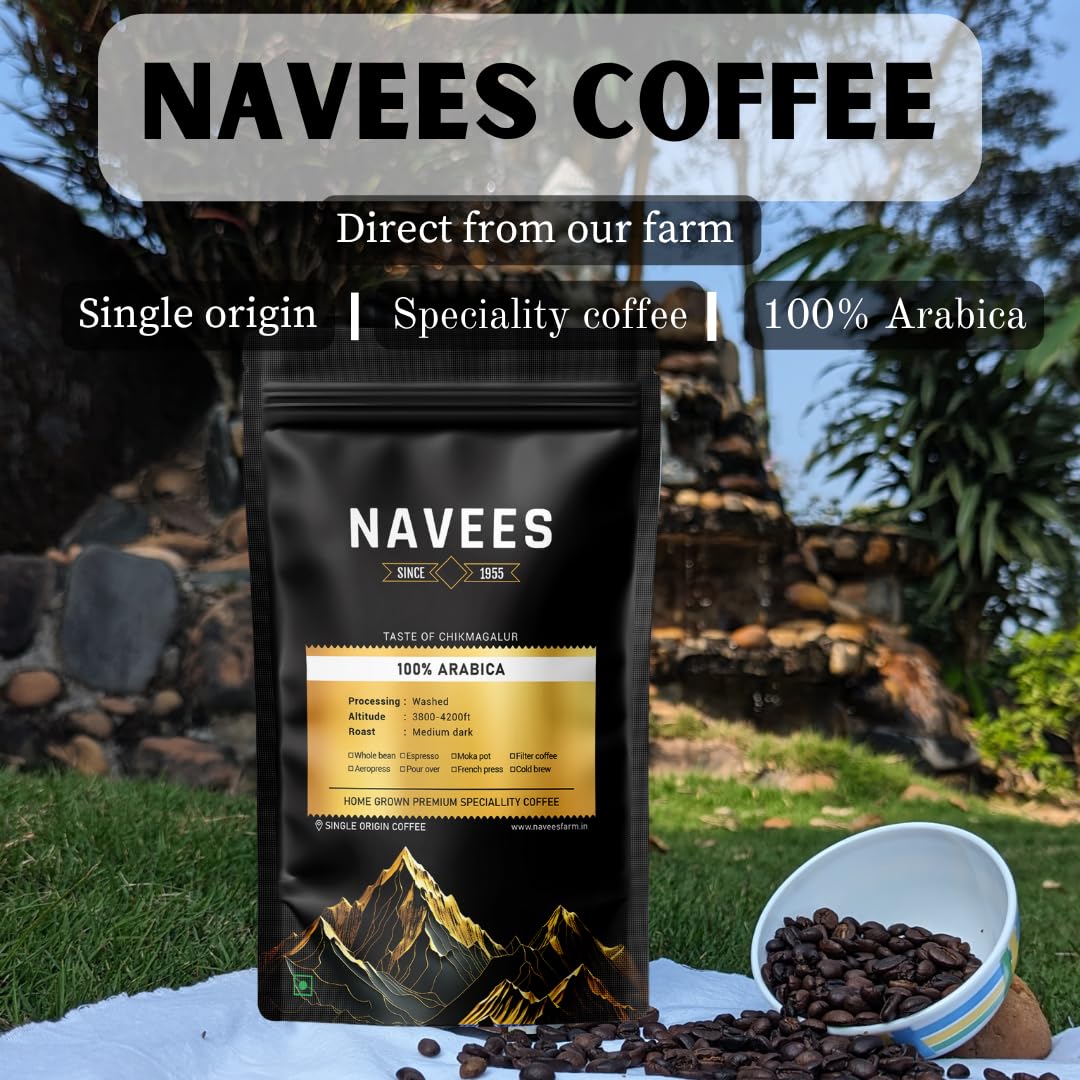
From our farm in Chikmagalur
Navees 100% Arabica Coffee
Our medium-dark roast has floral, citrus and nutty notes. Choose whole beans or the grind that suits your brewer on the product page.
Choose your coffee and grind