
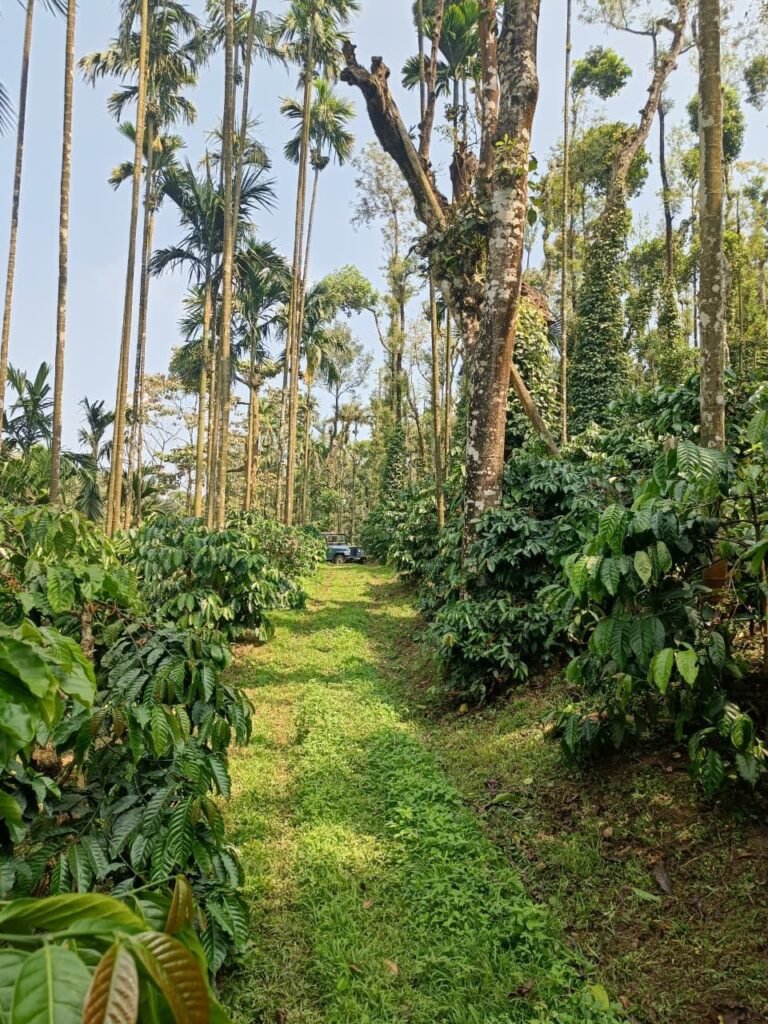
Chikmagalur coffee: a simple guide from our farm
Chikmagalur coffee is coffee grown in Chikmagalur district, Karnataka. Coffee in India started here. Farmers here grow both Arabica and Robusta, under shade trees, on hills about 700 to 1,500 metres high. Chikmagalur Arabica also has a GI tag from 2019.
Our family has been growing coffee in Chikmagalur since 1956. People ask us many questions about Chikmagalur coffee, so we have answered the common ones here.
 By Nirikshith, Founder, Navees Farm & Roastery.
Facts checked November 2026.
Chikmagalur coffee in short
| Chikmagalur district (Coffee Board of India) | Our farm | |
|---|---|---|
| Height | 700 to 1,200 m. Bababudangiri hills 1,000 to 1,500 m | Above 4,000 ft (about 1,220 m) |
| Rainfall | 1,000 to 4,500 mm a year | |
| Coffee grown | Arabica 37,000 ha, Robusta 23,000 ha | Arabica and Robusta |
| Coffee produced (average) | Arabica 29,000 tonnes, Robusta 30,000 tonnes | |
| Main varieties | Arabica: S.795, Sln.5B, Sln.9, Cauvery. Robusta: Peridenia, S.274, CxR | Arabica: SLN 795, Selection 9, Chandragiri and some others. Robusta: CxR and Old Robusta |
| Other crops grown with coffee | Pepper, cardamom, arecanut, orange, vanilla | Pepper on the shade trees |
| GI tags | Chikmagalur Arabica, Bababudangiris Arabica (2019) |
What is Chikmagalur coffee?
Any coffee grown in Chikmagalur district is called Chikmagalur coffee. It is not one variety or one brand. It can be Arabica or Robusta. It is grown by big estates and small farms, mostly under tall forest trees.
Many brands sell “Chikmagalur coffee”. Some of them grow it. Many only buy beans from here and roast them somewhere else. So the name tells you where the beans grew. It does not tell you who grew them or who roasted them. We have written below how to check this.
Why is Chikmagalur called the birthplace of coffee in India?
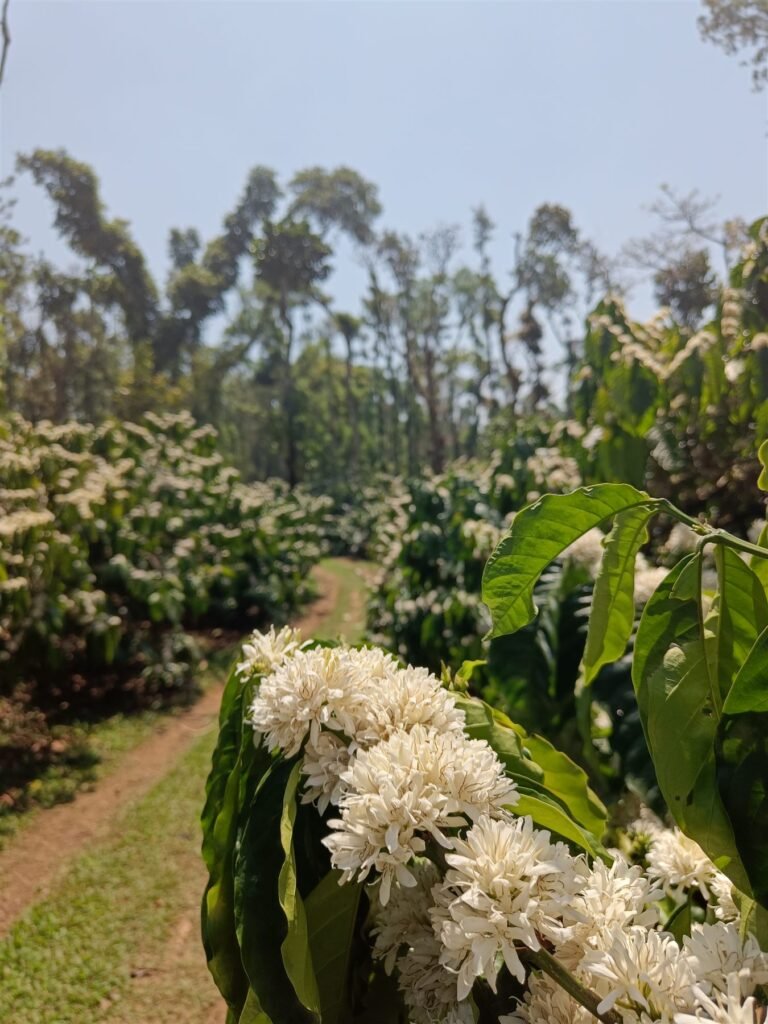
People say that a Sufi saint, Baba Budan, brought seven coffee seeds from Yemen about 400 years ago. He planted them in the Chandragiri hills of Chikmagalur. Most stories say this happened around 1670. The hills are now called Bababudangiri, after him. The Coffee Board of India also calls this area the birthplace of coffee in India.
The story is told in different ways, so take it as a story, not a record. But one thing is sure. Coffee has been grown in these hills for a very long time. Big estates came up in the 1800s. Today, Chikmagalur and Kodagu (Coorg) are the two biggest coffee areas in India.
India’s coffee research centre is also here. The Central Coffee Research Institute at Balehonnur, in Chikmagalur district, started in 1925. Many coffee plants grown in India today came from there, like S.795, Selection 9 and Chandragiri. All three grow on our farm.
Is Chikmagalur coffee Arabica or Robusta?
Both. As per the Coffee Board, Chikmagalur produces about 29,000 tonnes of Arabica and 30,000 tonnes of Robusta every year. More land is under Arabica (37,000 hectares) than Robusta (23,000 hectares), because Arabica gives less crop per acre.
Arabica is mostly grown higher up the hills. Robusta is mostly grown lower down. Our farm is above 4,000 feet, and we grow both.
- Our Arabica (SLN 795, Selection 9, Chandragiri and some others) is washed and roasted medium-dark. It tastes floral, citrusy and nutty.
- Our Robusta (CxR and Old Robusta) is natural processed and roasted dark. It tastes like cocoa nibs and molasses.
If you want a soft and light cup, take Arabica. If you want a strong cup with more caffeine, take Robusta. Many people who drink South Indian filter coffee like a mix of both. Not sure which one to take? See which Navees coffee is right for you.
Does Chikmagalur coffee have a GI tag?
Yes. In March 2019, the Government of India gave GI tags to five Indian coffees. Two of them are from Chikmagalur district: Chikmagalur Arabica and Bababudangiris Arabica. The other three are Coorg Arabica, Araku Valley Arabica and Wayanaad Robusta.
A GI tag is given to a product that comes from one particular place. So “Chikmagalur Arabica” should only be used for Arabica that is really grown in Chikmagalur district. Bababudangiris Arabica is a smaller area inside the district, on the higher hills, at 1,000 to 1,500 metres.
How does Chikmagalur coffee taste?
Indian coffee is known for a full body and less sourness, and Chikmagalur coffee is the same. The Coffee Board says this is because it grows under shade. But the taste depends more on the variety, the processing and the roast. A washed Arabica and a natural Robusta from the same farm will taste very different.
This is how our coffees taste:
| Our coffee | Roast | Taste |
|---|---|---|
| 100% Arabica | Medium-dark | Floral, citrus, nutty |
| 100% Robusta | Dark | Cocoa nibs, molasses, a little citrus |
| Premium Blend (70% Arabica, 30% Robusta) | Medium-dark | Floral and citrus, with a chocolaty, earthy, full body |
| Classic Chicory Blend (80% Arabica, 20% chicory) | Medium-dark | Strong body with a sweet, roasted finish. Made for filter coffee |
How is coffee grown and processed in Chikmagalur?
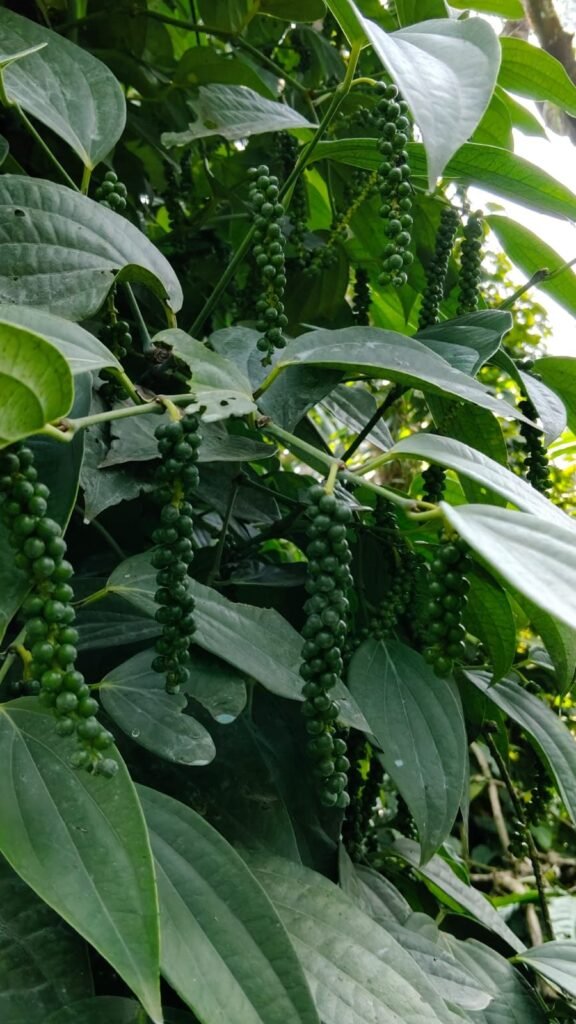
In Chikmagalur, coffee grows under two layers of shade trees. Pepper vines often climb on these trees. The coffee is picked by hand. As per the Coffee Board, all coffee in India is grown under shade. The shade keeps the plants cool, stops the soil from washing away on the slopes, and lets the coffee cherries ripen slowly.
This is how we do it on our farm:
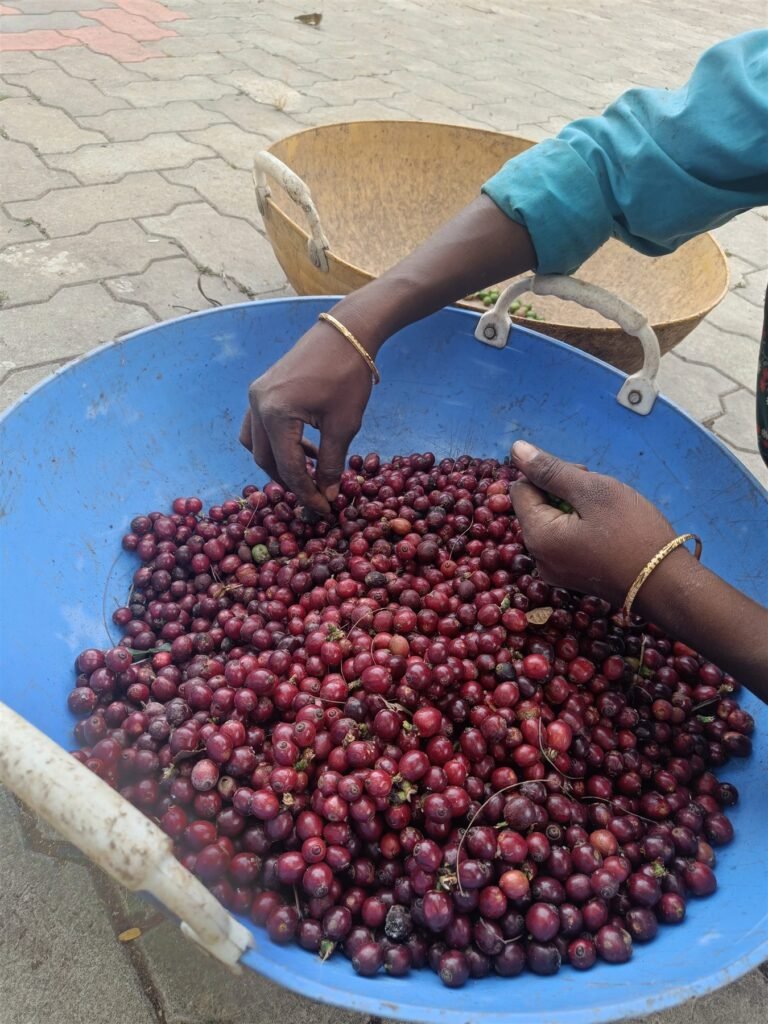
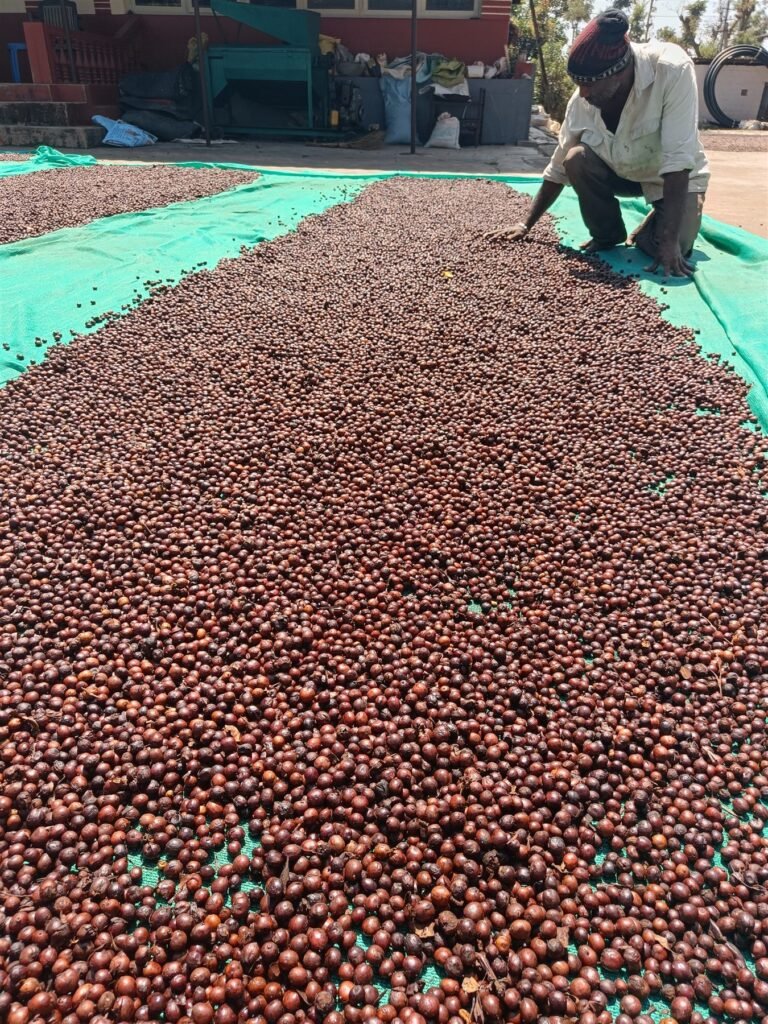
- Picking, November to January. We pick only the ripe red cherries, by hand.
- Processing. Our Arabica is washed, with 48 hours of fermentation. Our Robusta is natural, with 72 hours of fermentation without air (anaerobic). Read how we ferment our coffee.
- Drying in the sun.
- Grading. Our beans are A and AA grade. Read what coffee grades mean.
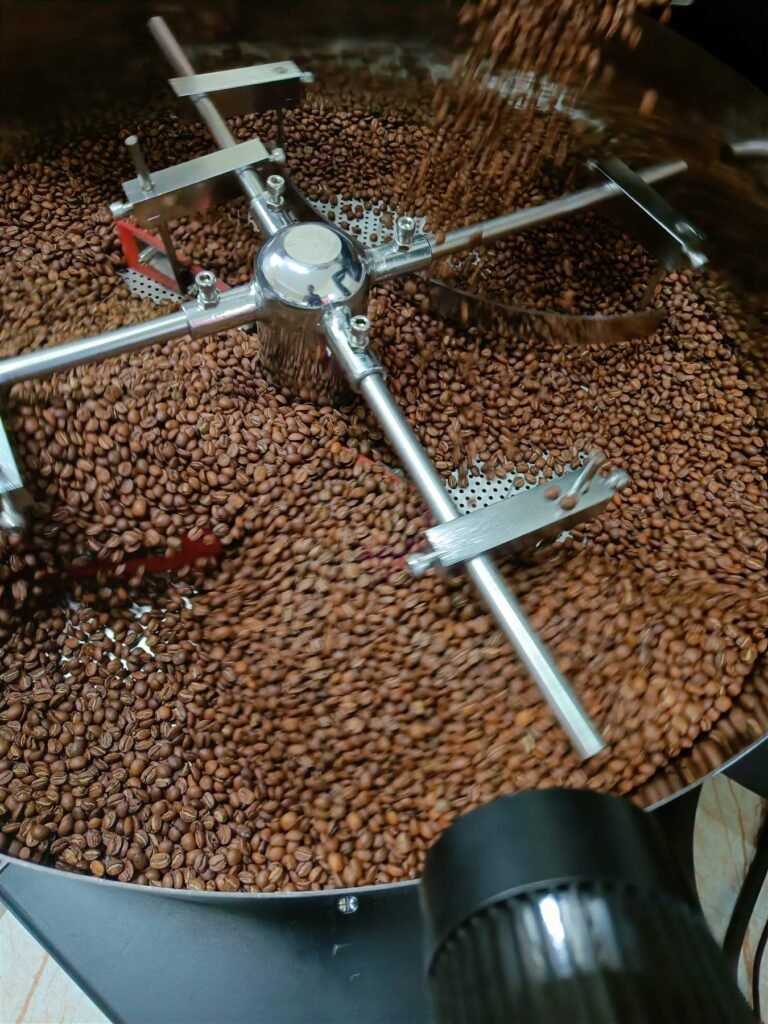
- Roasting on the farm, in small batches, every two days, based on orders. Then we grind it as per your brewing method.
The black pepper we sell also grows on the same shade trees.
Coorg coffee or Chikmagalur coffee: what is the difference?
Coorg (Kodagu) grows more coffee in total, and most of it is Robusta. Chikmagalur grows less in total, but more Arabica. Both are in Karnataka, both grow coffee under shade, and both have GI tags for their Arabica.
| Chikmagalur | Coorg (Kodagu) | |
|---|---|---|
| Height | 700 to 1,200 m (Bababudangiris up to 1,500 m) | 750 to 1,100 m |
| Land under Arabica | 37,000 ha | 26,000 ha |
| Land under Robusta | 23,000 ha | 56,000 ha |
| Coffee produced (average) | Arabica 29,000 t, Robusta 30,000 t | Arabica 24,000 t, Robusta 69,000 t |
| GI tags | Chikmagalur Arabica, Bababudangiris Arabica | Coorg Arabica |
Figures from the Coffee Board of India.
One is not better than the other. If you like Arabica, Chikmagalur has more of it, including the coffee from the high Bababudangiri hills. Good Robusta comes from both places. What really matters is how the farm picks, processes and roasts the coffee.
What is the price of Chikmagalur coffee?
Coffee bought directly from a farm costs a little more than supermarket coffee, because it is from one farm and freshly roasted. On our site, 1 kg costs ₹1,599 for 100% Arabica or Premium Blend, ₹1,399 for 100% Robusta, and ₹1,199 for Classic Chicory Blend. Shipping is ₹30 anywhere in India. Small packs start at ₹219 for 100 g of Arabica. (Prices as of November 2026.)
You may also see “coffee rate today” for Chikmagalur. That is a different thing. It is the price traders pay farmers for raw, unroasted coffee in bulk. It is not the price of roasted coffee that you drink.
How to know if it is real Chikmagalur coffee?
Check if the pack tells you the farm name, the district, the processing method and the roast date. A farm that really grows the coffee can tell you the variety, the height and the harvest season. If the pack only says “Chikmagalur coffee” and nothing else, it only tells you where the beans came from.
A few simple checks:
- Who grew it? The farm should be able to tell you the variety, the height and when it was picked.
- When was it roasted? Fresh coffee is roasted after you order. We roast every two days and ship across India, usually in 1 to 2 working days.
- Does it have chicory? Many filter coffee powders have chicory added. Ours do not, except the Classic Chicory Blend, and that is written on the pack.
- Is it really from that brand? Navees Coffee is sold only under the Navees name, on naveesfarm.in and on our Amazon.in listings.
Can I visit a coffee estate in Chikmagalur?
Yes. Many estates in Chikmagalur have stays or tours. On our farm, we do harvest tours for ₹1,500 per person. You can see the coffee and pepper plants, and how we pick and process the cherries. Book a farm visit.
Buy Chikmagalur coffee from our farm
We grow, process and roast our coffee on our family farm in Chikmagalur. We grind it as per your brewing method: espresso, moka pot, South Indian filter, pour over, French press, cold brew or AeroPress.
- 100% Arabica: beans or powder, 100 g to 1 kg
- Premium Blend, 70% Arabica 30% Robusta: beans or powder, 250 g to 1 kg
- 100% Robusta: powder, 250 g to 1 kg
- Classic Chicory Blend: for South Indian filter coffee
For cafés: we have supplied coffee to more than 100 cafés in the last two years. Wholesale orders start from 20 kg. All our farm details are on the Navees Farm facts page.
By Nirikshith, Founder, Navees Farm & Roastery. Facts checked November 2026.