
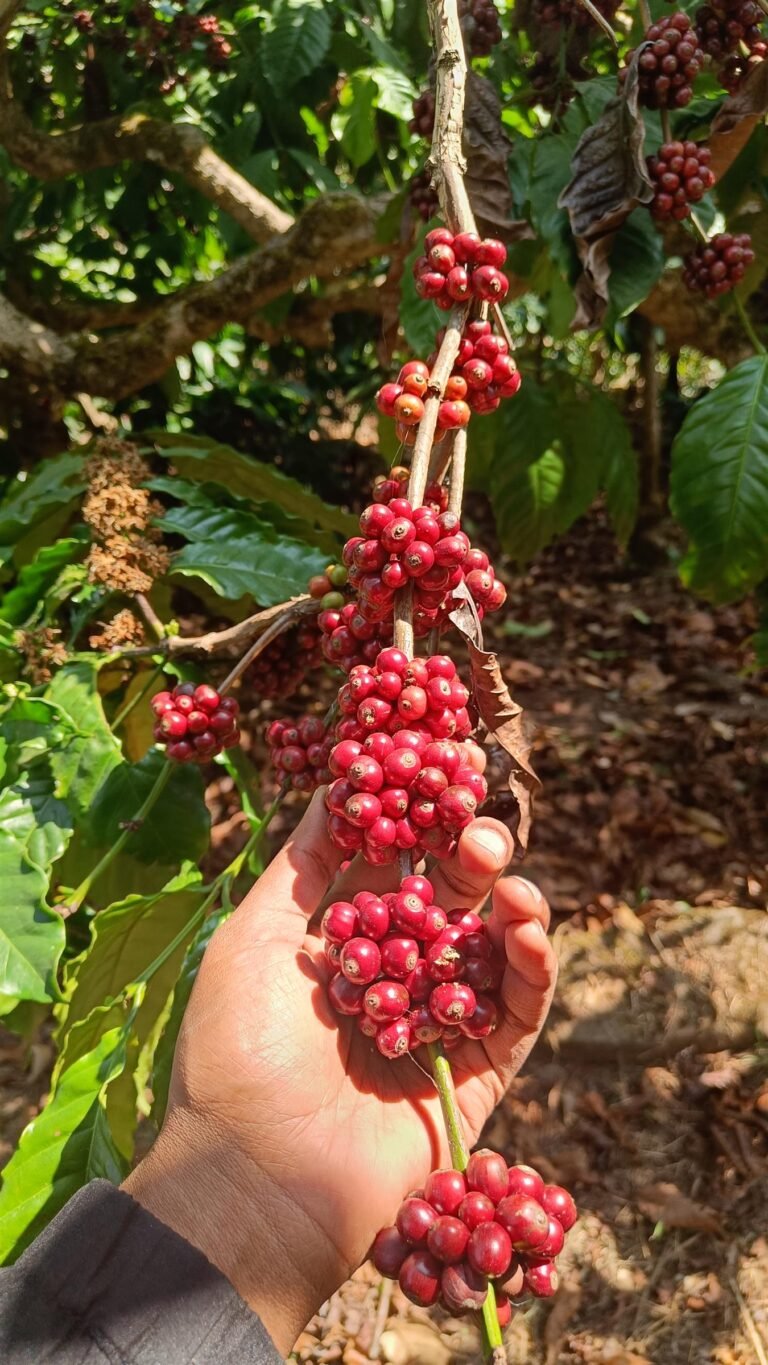
Coffee fermentation and processing: washed, natural, honey and anaerobic, explained from our farm
Coffee fermentation is the step after picking, when yeasts and bacteria break down the sweet, sticky fruit layer around the coffee seed.
It happens on the farm, before drying and roasting, and it changes the taste of the coffee. How long it runs, and whether air is allowed in or kept out, decides if a coffee is washed, natural, honey or anaerobic.
On our farm in Chikmagalur, we do it in two ways. Our Arabica is washed, with a 48-hour fermentation. Our Robusta is a natural, with a 72-hour anaerobic fermentation. Both are dried in the sun.
 By Nirikshith, Founder, Navees Farm & Roastery.
Facts checked November 2026.
At a glance: how Navees coffee is processed
| Arabica | Robusta | |
|---|---|---|
| Varieties | SLN 795, Selection 9, Chandragiri and others | CxR and Old Robusta |
| Elevation | Over 4,000 ft (about 1,220 m) | Over 4,000 ft |
| Harvest | November to January, ripe cherries hand picked | November to January, ripe cherries hand picked |
| Process | Washed (wet processed) | Natural (dried with the fruit on) |
| Fermentation | 48 hours | 72 hours, anaerobic (sealed, no air) |
| Drying | In the sun | In the sun, on raised beds |
| Roast | Medium-dark, on the farm every two days | Dark, on the farm every two days |
How is coffee processed, step by step?
Coffee is the seed of a red fruit called the coffee cherry. Processing is how the farm takes off the fruit and dries the seed, so that it can be stored, sent and roasted. The methods differ in when the fruit comes off: before fermentation (washed), after drying (natural), or partly (honey).
- Picking. Ripe cherries are picked by hand. On our farm, picking runs from November to January.
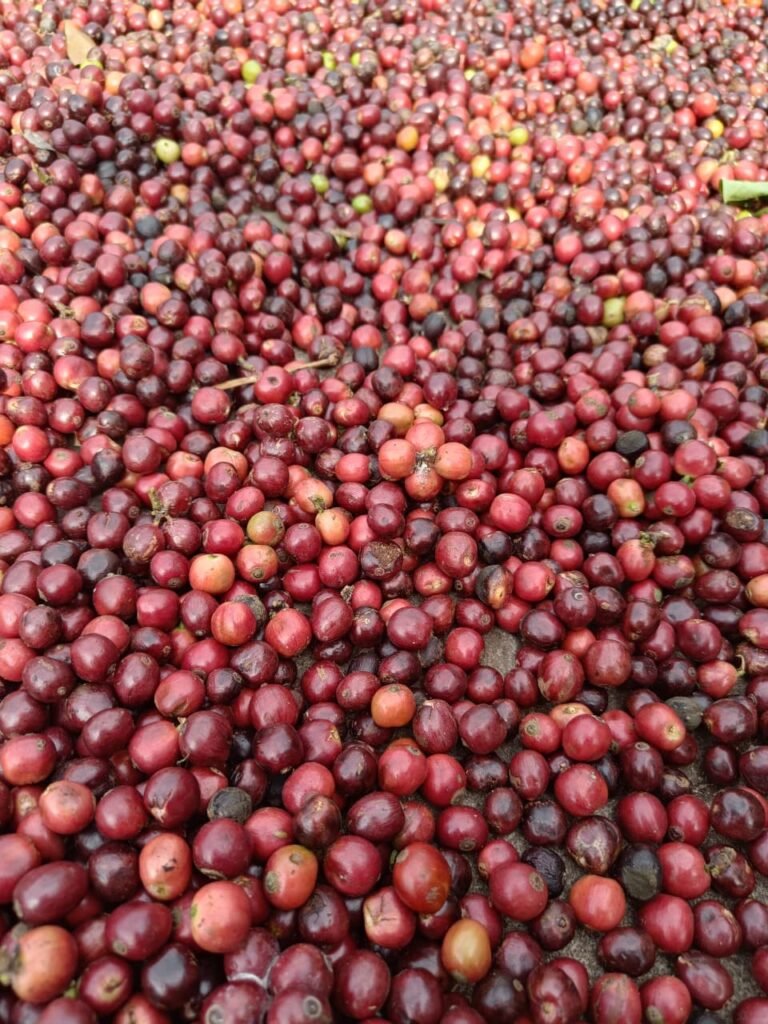
- Sorting. Unripe and damaged cherries are taken out, because they do not ferment evenly.
- Processing and fermentation. Either the fruit is taken off and the seeds are fermented (washed), or the whole cherry is fermented and dried (natural). More on this below.
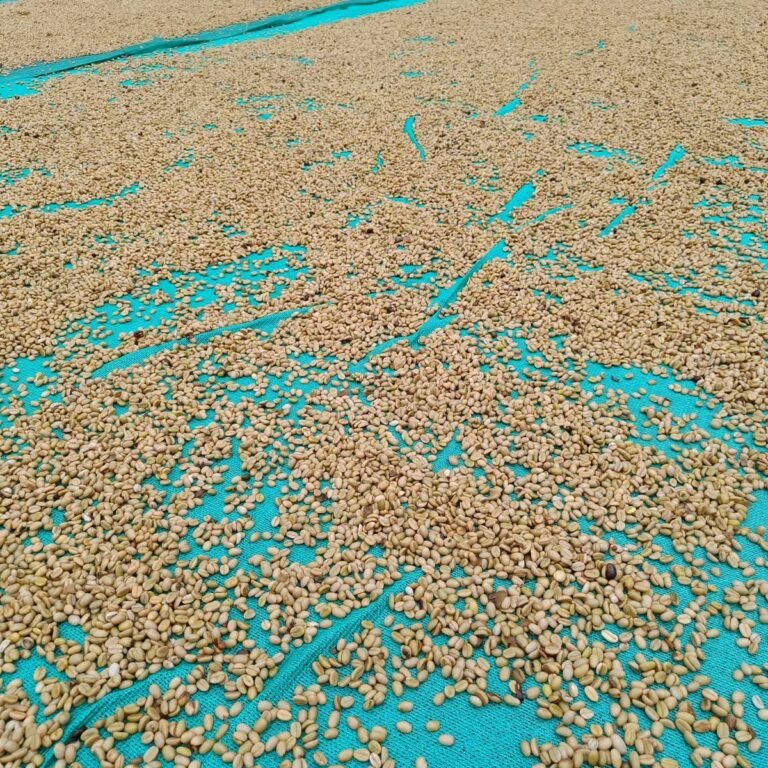
- Drying. In the sun, until the beans are dry enough to store safely.
- Hulling and grading. The dry outer skin (husk or parchment) is taken off, and the green beans are sorted by size and quality (see coffee grading).
- Roasting. The green beans turn brown and get their smell and taste. We roast on the farm in small batches every two days.
Indian coffee names you may see: In the Indian coffee trade, washed Arabica is called “Plantation”, washed Robusta is called “Parchment”, and natural (unwashed) Arabica or Robusta is called “Cherry”. So “Robusta Cherry” means a natural Robusta. It is not coffee made from fresh fruit.
What is coffee fermentation?
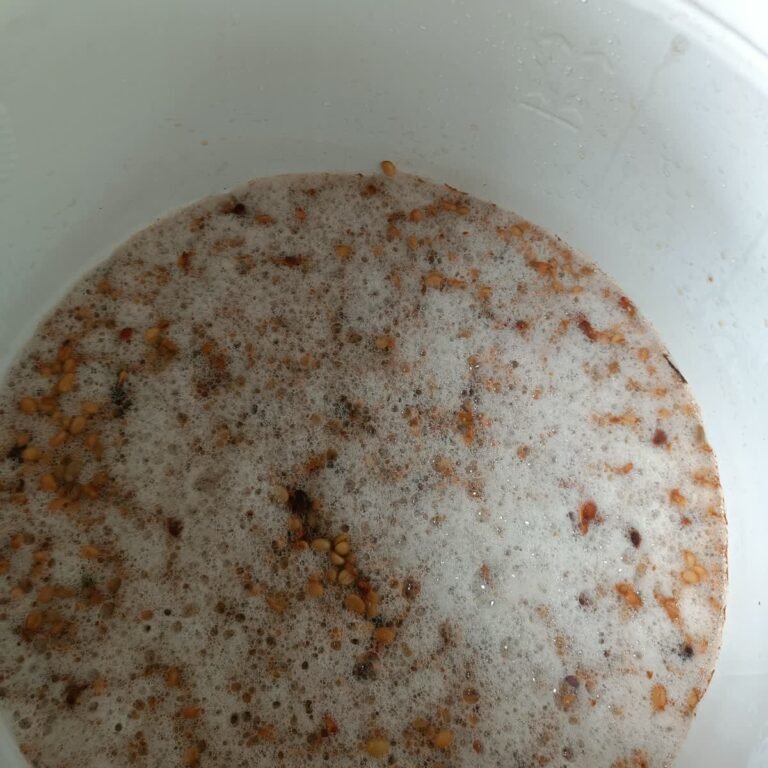
In coffee, fermentation means tiny microbes (mainly yeasts and lactic acid bacteria) feeding on the sugars in the fruit pulp and in the sticky layer under it, called mucilage. They loosen the mucilage so it can be washed off. They also make acids, alcohols and smell (aroma) compounds. Some of these stay in the bean, and you taste them in the cup as a fruity or fresh, bright taste.
Every processing method has some fermentation. What changes is where it happens (in water, in open air, or in a closed tank or bag), how long it runs, and whether the microbes are natural or added by the farm. Researchers agree that careful fermentation makes coffee better, and that fermenting for too long gives sour, vinegar-like or rotten tastes. So farms count the hours and stop it on time.
What is washed coffee?
Washed coffee, also called wet processed coffee, has its fruit taken off before drying. The cherries are pulped (skin and pulp removed), fermented for a fixed time so the mucilage loosens, then washed clean and dried in a thin skin called parchment. Washed coffees usually taste cleaner and brighter, because the seed spends less time with the fruit.
At Navees: our Arabica is washed. After pulping, it ferments for 48 hours in clean water tanks. Then it is washed and dried in the sun. Our roasted 100% Arabica tastes floral, citrus and nutty. A green micro-lot from this process (SLN 795 and Chandragiri) scored 84.25 when a certified Q grader cupped (tasted and scored) it. Specialty coffee starts at 80, so this is well above it.
What is natural process coffee?
Natural coffee, also called dry processed or unwashed coffee, is dried with the whole cherry still around the seed. The fruit is taken off only after drying. The seed stays with the drying fruit for days, so naturals usually taste fruitier and sweeter, and feel heavier in the mouth, than washed coffee from the same farm.
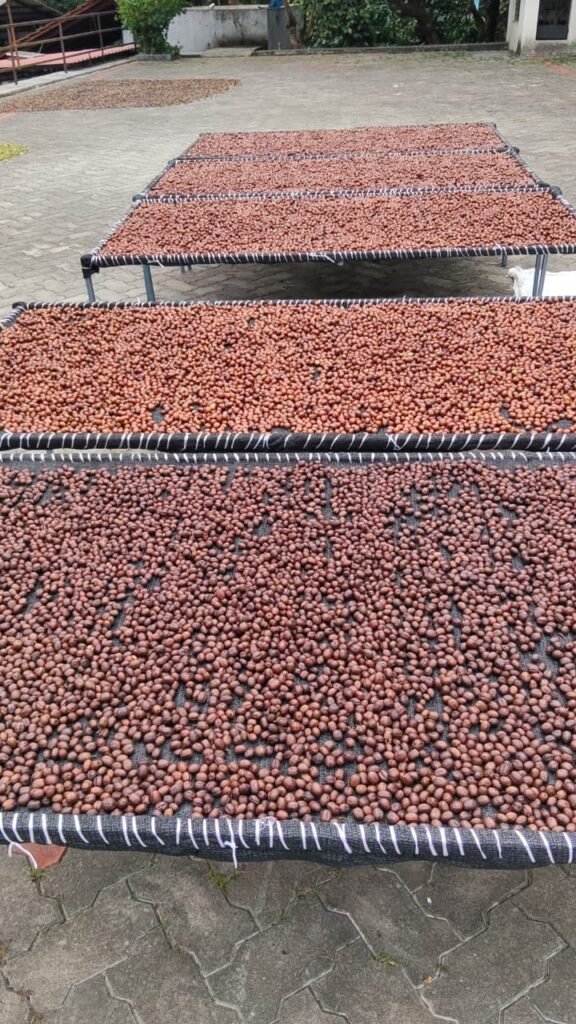
At Navees: our Robusta is a natural. After a 72-hour anaerobic fermentation (see below), the whole cherries are dried in the sun on raised beds. Our roasted 100% Robusta tastes of cocoa nibs and molasses, with a little citrus.
What is honey process coffee?
Honey process coffee is pulped like washed coffee, but dried with some or all of its sticky mucilage still on. No honey is used. The name comes from how sticky the beans look and feel. The taste is usually between washed and natural: sweeter than washed, cleaner than natural.
At Navees: this year, we are making a honey process coffee at our farm.
Washed vs natural vs honey: what’s the difference?
| Washed | Honey | Natural | |
|---|---|---|---|
| Fruit removed | Before drying, all of it | Skin before drying, mucilage left on | After drying |
| Fermentation | In water or tanks, after pulping | On the drying beds, with the mucilage | Inside the whole cherry while drying (or sealed first, if anaerobic) |
| Usual taste | Clean and bright, with clear acidity | Sweet and smooth | Fruity, sweet, heavier in the mouth |
| At Navees | Arabica, 48 hours | Making this year | Robusta, 72 hours anaerobic |
Which is better? Neither. It depends on how you like your coffee. Washed coffees often suit black coffee and pour over. Heavier naturals and Robusta go well with milk and in cold brew. Our moka pot, cold brew, French press and South Indian filter guides tell you which Navees coffee suits each brew.
What is anaerobic coffee?
Anaerobic coffee is fermented in a closed, sealed container, so outside air cannot get in. Without fresh air, the microbes work differently and make different flavours. Anaerobic coffees often taste much more fruity, and sometimes a little like wine or liquor, compared with the same coffee fermented in open air.
“Anaerobic” is only about the fermentation, not the whole process. So it is used along with the methods above:
- Anaerobic natural: whole cherries are sealed and fermented, then dried with the fruit on.
- Anaerobic washed: pulped coffee is sealed and fermented, then washed and dried.
- Double anaerobic: two sealed fermentation stages, one after the other.
The word is not exact. In most sealed tanks, the microbes first use up the little air trapped inside. So at the start there is a little air, and after that there is no air at all.
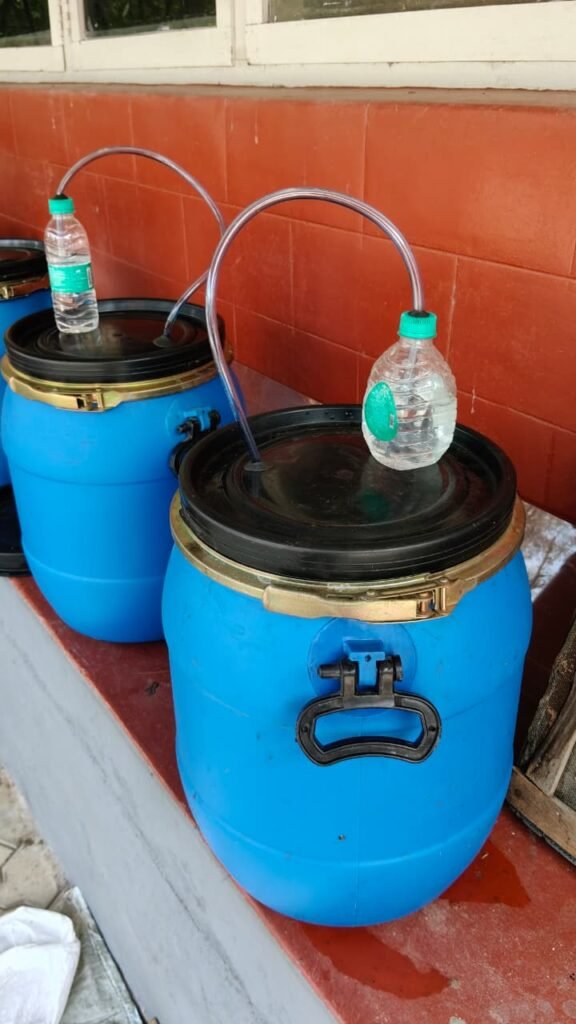
At Navees: our Robusta is an anaerobic natural. We pack ripe CxR and Old Robusta cherries into heavy-duty bags, seal them and ferment them for 72 hours. Then the cherries are spread on raised beds to dry in the sun. We also make an anaerobic washed Arabica micro-lot (see below).
What is yeast-inoculated coffee fermentation?
In yeast-inoculated fermentation, the farm adds a chosen yeast, instead of depending only on the natural microbes already on the fruit. This makes the fermentation easier to control, and each type of yeast changes the flavour in its own way.
At Navees: for our 72-hour Cima yeast-inoculated anaerobic washed Arabica (SLN 795), the coffee is pulped, Lalcafé Cima (a ready-made coffee yeast) is added, and it ferments in sealed tanks for 72 hours. Then it is washed by hand and dried. A certified Q grader scored it 83.75, which is specialty grade, with notes of orange citrus, milk chocolate, warm honey and caramel.
Does fermentation change how coffee tastes?
Yes. After the coffee variety and the farm, processing is one of the biggest things that decides how coffee tastes. The same Arabica can taste clean and citrusy when washed, and jam-like when natural. Longer and sealed fermentations push the taste further towards fruit and wine-like notes.
It can also go wrong. Over-fermented coffee tastes sour, vinegar-like or rotten. That is why we stop at a fixed time: 48 hours for washed Arabica and 72 hours for anaerobic Robusta.
Can Robusta be specialty coffee?
Yes. Robusta is scored on its own scale, and a Robusta that scores 80 or more out of 100 is called “Fine Robusta”. This is the Robusta version of specialty Arabica. Most Robusta is grown for quantity and sold in bulk as ordinary coffee. Careful picking and processing, like a long anaerobic fermentation, can take it up to the fine grade.
At Navees: our 72-hour anaerobic Robusta naturals micro-lot scored 81 when cupped by a certified Q grader, which is in the Fine Robusta range. It is coming soon as green beans. Our roasted 100% Robusta is from the same farm and the same process, and you can buy it now.
Is fermented coffee alcoholic?
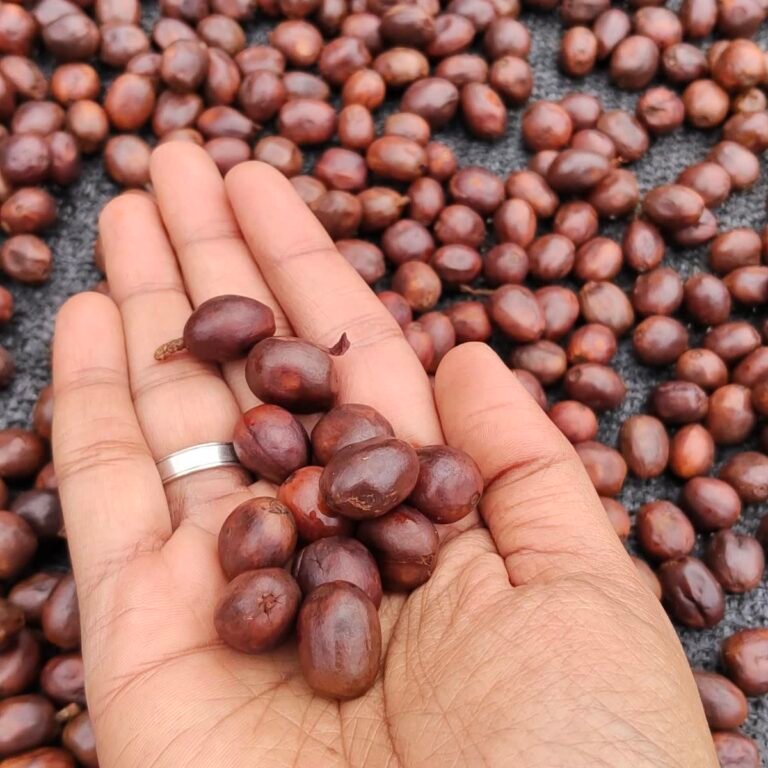
No. Coffee made from fermented beans is not an alcoholic drink. The fermentation happens to the fruit on the farm, weeks before roasting. Studies of fermented coffee have found small amounts of ethanol (alcohol) among the many aroma compounds left in roasted beans, along with other compounds that give fruity notes. When a tasting note says “boozy” or “winey”, it only describes the flavour. We have not had our own coffee tested for alcohol.
Is fermented coffee better or healthier?
Fermentation is about flavour, not health. It changes how coffee tastes. We do not make any health claim for fermented coffee, and nobody should without good proof. If you want a fruitier cup, try a natural or anaerobic coffee. If you want a cleaner cup, try a washed coffee.
Is coffee a fermented food?
Not in the way curd or idli batter is. Coffee beans are fermented on the farm, but roasting heats them far more than any microbe can survive. So brewed coffee has no live cultures. Fermentation leaves its mark on the flavour only, not as microbes in your cup.
Which Navees coffee should I try?
| You want | Try | Process |
|---|---|---|
| Clean, floral and citrus, black or with milk | 100% Arabica, whole beans or any grind | Washed, 48-hour fermentation |
| Bold and chocolaty, for milk coffee or cold brew | 100% Robusta, any grind | Natural, 72-hour anaerobic |
| Something in between | Premium Blend, 70% Arabica and 30% Robusta | Both of the above |
| To roast it yourself | Green micro-lots: 48-hour washed Arabica, 72-hour Cima yeast anaerobic washed Arabica, 72-hour anaerobic Robusta (coming soon) | As in the name |
Questions about how we process our coffee? WhatsApp us on +91 89510 71881 or email queries@naveesfarm.in. During the harvest, from November to January, you can visit the farm and see it yourself.
Sources
- Haile, M. and Kang, W. H. (2019), The Role of Microbes in Coffee Fermentation and Their Impact on Coffee Quality, Journal of Food Quality. doi:10.1155/2019/4836709
- Elhalis, H. et al. (2020), The role of wet fermentation in enhancing coffee flavor, aroma and sensory quality, European Food Research and Technology.
- Frontiers in Food Science and Technology (2024), mini-review on postharvest processing of Coffea canephora (Robusta), including self-induced anaerobic fermentation. Link
- Frontiers in Sustainable Food Systems (2024): 80+ points is “specialty” for Arabica and “fine” for Robusta. Link
By Nirikshith, Founder, Navees Farm & Roastery. Facts checked November 2026.